Unveiling the Eyes of Modern Industry A Comprehensive Guide to Sensor Principles and Applications
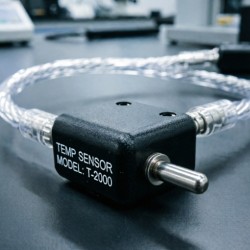
Unveiling the Eyes of Modern Industry A Comprehensive Guide to Sensor Principles and Applications
In an automated production line what precisely detects the position of a tiny component in real time When a self driving car navigates city streets what perceives changes in its surroundings within milliseconds The answer is unequivocal Sensors
As a professional engineer with years of experience in industrial automation I often liken sensors to the nerve endings connecting the physical world to the digital realm They not only endow machines with perception but also serve as the cornerstone of the Internet of Things IoT and smart manufacturing Today I will not delve into esoteric theories instead I want to discuss the practical indispensable sensor technologies that truly work on the front lines
The Core Mechanics How Do Sensors Think
Although the market offers a vast array of sensors from a mechanistic perspective they can be primarily divided into two camps Physical Perception and Chemical Biological Perception
Physical Principle Based Hardcore Measurement
This category is the most prevalent in industrial settings They utilize changes in mechanics electromagnetism or optics to output signals
- The Optical Game of Photoelectric Sensors This is the most classic example By converting changes in light intensity into electrical signals they achieve control For instance on an assembly line when a product blocks the light path transmissive type or reflects light diffuse type the system instantly knows the material is in place At the heart of this often lies a precision photodiode or phototransistor
- Hall Effect and Magnetic Sensing In motor control and current monitoring Hall sensors are crucial Utilizing Hall elements to sense magnetic field changes they are vital in flow meters where fluid pushes a turbine to rotate Each time the magnet on the turbine rotates the Hall element senses a magnetic change thereby accurately calculating the flow rate
- Resistive and Capacitive Sensing From the touch screen of your smartphone capacitive to the weight measurement of an electronic scale resistive strain gauge these sensors convert pressure displacement or humidity into readable data by detecting minute changes in resistance or capacitance
Chemical Principle Based Smell and Taste
These sensors resemble the human nose and tongue
- Gas Sensors Utilizing the principle that gas sensitive materials change conductivity upon adsorbing gas molecules they are widely used in air quality monitoring mine safety and gas leak alarms
- Biosensors Combining biological recognition elements such as enzymes antibodies with transducers they convert complex biochemical reactions into electrical signals Medical blood glucose meters and pulse oximeters are typical applications of this principle
Real World Applications How Sensors are Transforming Industries
No matter how good the theory it is best demonstrated by its practical application In numerous projects I have participated in the application of sensors often determines the upper limit of a system
Industrial Automation The Guardian of the Production Line
In a modern smart factory sensor networks are ubiquitous
- Precision Control In CNC machine tools encoders and linear scales provide real time position feedback ensuring machining accuracy down to the micron level
- Safety Protection Safety Light Curtains are standard equipment for stamping presses If an operators hand mistakenly enters a hazardous area the light curtain immediately cuts off the power preventing accidents
- Predictive Maintenance By installing vibration sensors on motor bearings we can detect signs of imbalance or wear in advance transforming maintenance from reactive repair to preventative action saving substantial downtime costs for enterprises
Automotive Electronics From ADAS to Airbags
Modern cars are no longer merely mechanical products but mobile sensor hubs
- Active Safety Millimeter wave radar and cameras photoelectric sensors work in concert to enable Adaptive Cruise Control ACC and Automatic Emergency Braking AEB
- Passive Safety Acceleration sensors constantly monitor vehicle deceleration Upon detecting a violent collision they trigger the airbag within milliseconds
- Powertrain The Engine Control Unit ECU relies on data from dozens of sensors such as oxygen sensors and intake pressure sensors to precisely control fuel injection and ignition timing ensuring both fuel efficiency and environmental friendliness
Medical and Environmental The Sentinels Guarding Life and Health
- Medical Imaging In CT and MRI machines high precision sensor arrays capture weak electromagnetic signals to construct clear images of the human bodys interior
- Environmental Monitoring In wastewater treatment plants pH sensors and dissolved oxygen sensors work around the clock to ensure discharge water quality meets standards protecting our green waters and green mountains
An Engineers Guide Selection and Trends
In practical applications many colleagues encounter difficulties with selection or signal interference Here are a few practical tips
- Anti Interference is Key: In environments with strong electromagnetic fields e g near inverters opt for fiber optic sensors or shielded sensors Fiber optics are immune to electromagnetic interference and allow for long distance transmission
- Calibration is Non Negotiable: Any sensor may drift over time For instance a flow transmitter usually has zero adjust and span adjust potentiometers regular calibration ensures
- The Trend: Intelligence and Integration: Future sensors will not merely be simple signal converters. They will house microprocessors, possess self-diagnosis and self-calibration functions, and directly output digital signals (e.g., IO-Link protocol). This means less wiring, higher data reliability, and lower maintenance costs.
Conclusion
Although sensor technology may seem low-key, it is the bedrock of the modern industrial edifice. Whether you are an engineer seeking solutions or an enthusiast curious about automation technology, I hope this article provides valuable reference.
Jinftry is a leading global electronic component distributor, selling many types of sensors, including temperature sensors, pressure sensors, humidity sensors, optical sensors, proximity sensors, magnetic sensors, position sensors, etc. Jinftry is your best supplier choice, with its low price advantage, rich supply chain resources, can provide you with original & new, excess, obsolete/EOL and hard-to-find materials. If you have any sensor requirements, you can submit an inquiry via the Jinftry website or send an email directly to sales@jinftry.com.