Previous Chapter:What is an interface IC?
Next Chapter:What is BGA
What is diode?
Post Date:2024-05-30,Comchip Technology
What are diodes and their characteristics in electronics?
Diodes are fundamental components in modern electronics, playing crucial roles in various applications. These tiny yet powerful devices control the flow of electrical current, ensuring the proper functioning of countless electronic circuits. Understanding diodes and their importance is essential for anyone involved in electronics, from hobbyists to professionals.What is diode?
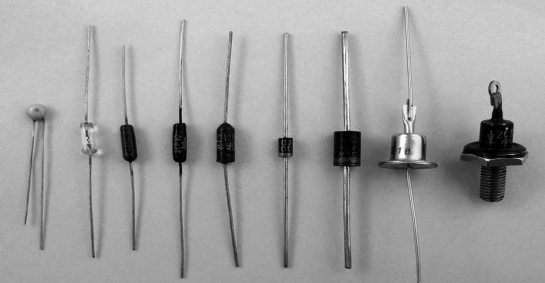
A diode is a semiconductor device that allows current to flow in one direction while blocking it in the opposite direction. It is commonly used in electronic circuits for rectification, switching, signal modulation, and protection. The primary function of a diode is to ensure the unidirectional flow of current, making it a crucial component in converting alternating current (AC) to direct current (DC). Diodes are characterized by their two-terminal structure, consisting of an anode and a cathode. The diode symbol, featuring a triangle pointing towards a line, represents its one-way conductivity.In various electronic circuits, the use of diodes and resistors, capacitors, inductors and other components are reasonably connected to form circuits with different functions, which can achieve a variety of functions such as AC rectification, modulation signal detection, limiting and clamping, and voltage regulation of the power supply voltage. Whether it is in the common radio circuit or in other household electrical products or industrial control circuits, traces of diodes can be found.
What are Diodes Composed of?
Diodes are primarily composed of semiconductor materials, such as silicon or germanium. These materials are chosen for their ability to conduct electricity under certain conditions. The main elements of a diode include:P-type Semiconductor: This part of the diode is doped with elements that create an abundance of holes (positive charge carriers). Common dopants include boron or gallium.
N-type Semiconductor: This region is doped with elements that provide an excess of electrons (negative charge carriers). Phosphorus or arsenic are typical dopants used.
P-N Junction: The interface between the P-type and N-type semiconductors forms the P-N junction, which is the heart of the diode. This junction is crucial for the diode's rectifying behavior.
Anode and Cathode: The anode is the positive terminal, connected to the P-type material, while the cathode is the negative terminal, connected to the N-type material. These terminals facilitate the connection of the diode within a circuit.
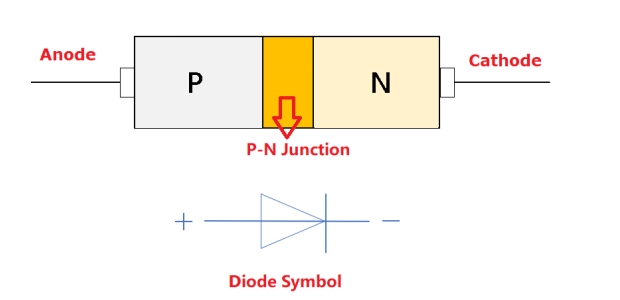
(Structure of diode)
How does a diode work?
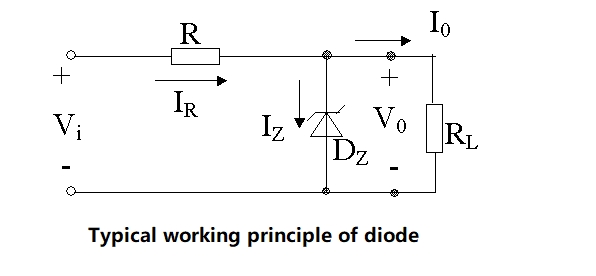
The main principle of the diode is to use the one-way conductivity of the PN junction, and add leads and packages to the PN junction to make it a diode. The crystal diode is a PN junction composed of P-type semiconductor and N-type semiconductor, which forms a space charge layer on both sides of its interface and has a self-established electric field. When the diode is forward-biased (positive voltage applied to the anode and negative voltage applied to the cathode), the depletion region on the P-N junction narges, allowing current to flow freely. Conversely, when the diode is reverse-biased (a negative voltage is applied to the anode and a positive voltage is applied to the cathode), the depletion region widens, preventing current from flowing.In the absence of applied voltage, the diffusion current caused by different carrier concentration on both sides of PN junction is equal to the drift current caused by self-built electric field, and is in electric equilibrium state. When there is a forward voltage deviation, the mutual suppression of the external electric field and the self-built electric field will increase the carrier diffusion current and cause the forward current. When the external reverse voltage deviation exists, the external electric field and the self-built electric field are further strengthened, and the reverse saturation current independent of the reverse voltage is formed within a certain reverse voltage range. When the applied reverse voltage is high to a certain extent, the electric field strength in the PN junction space charge layer reaches a critical value, resulting in the carrier doubling process, a large number of electron hole pairs, resulting in a large value of the reverse breakdown current, that is, the breakdown phenomenon of the diode. The reverse breakdown of PN junction can be divided into Zener breakdown and avalanche breakdown.
Characteristics of Diodes
Diodes exhibit several key characteristics that define their performance and application range:
Forward Voltage (Vf)
The voltage required to forward bias the diode and allow current to flow. Silicon diodes typically have a forward voltage of around 0.7V, while germanium diodes have around 0.3V.
Reverse Voltage (Vr)
The maximum voltage the diode can withstand in reverse bias without breaking down.
Reverse Current (Ir)
The small current that flows through the diode when reverse biased. This current is usually in the nanoampere range for silicon diodes.
Breakdown Voltage (Vbr)
The reverse voltage at which the diode undergoes breakdown and conducts a large reverse current.
Forward Current (If)
The current that flows through the diode when it is forward biased. Diodes are rated for a maximum forward current.
Capacitance
Diodes have junction capacitance that affects their performance at high frequencies.
Switching Speed
The time it takes for the diode to switch from conducting to non-conducting state and vice versa. Fast switching diodes are essential for high-speed applications.
What are the common types of diodes?
Diodes come in various types, each designed for specific applications. They can be separated into numerous types according to its structure, function and characteristics. The main classifications include:Rectifier Diodes
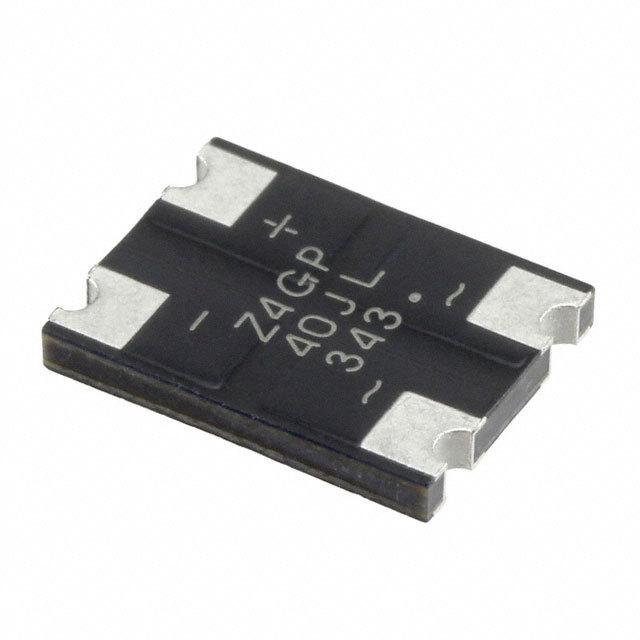
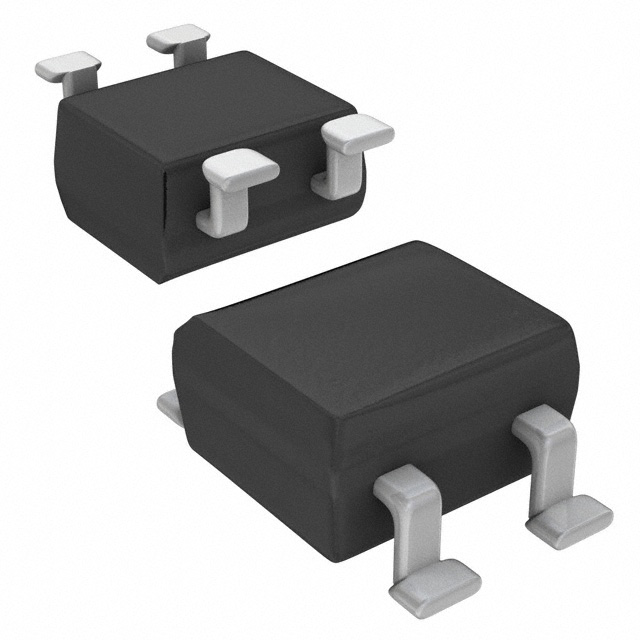
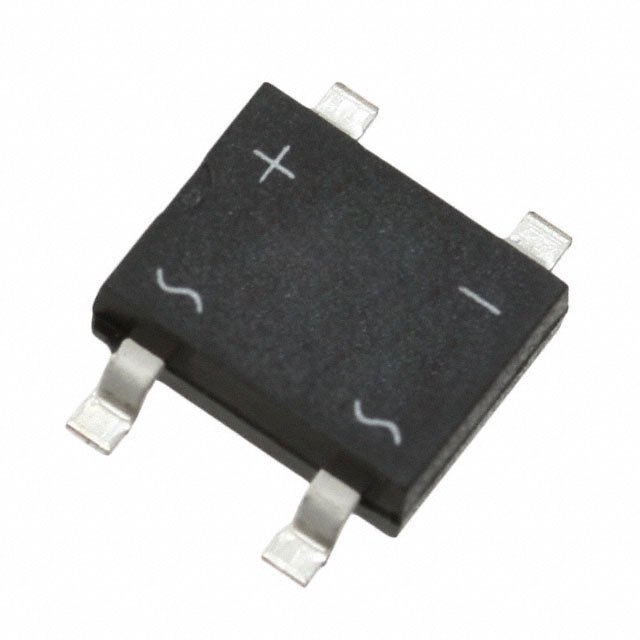
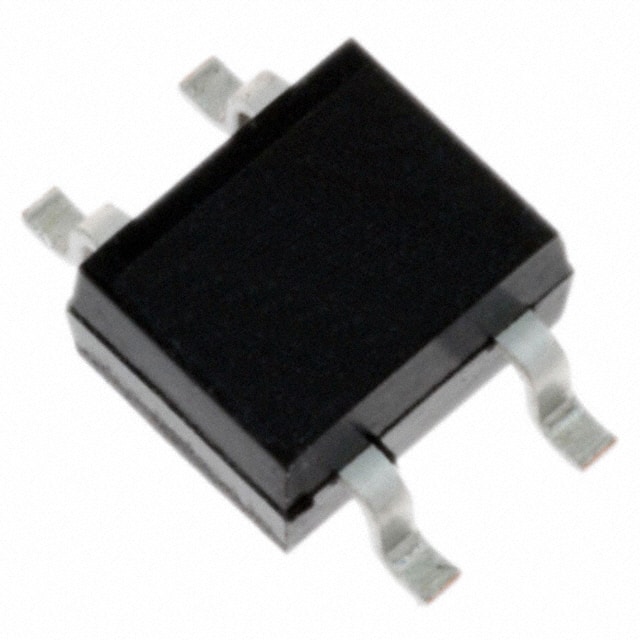
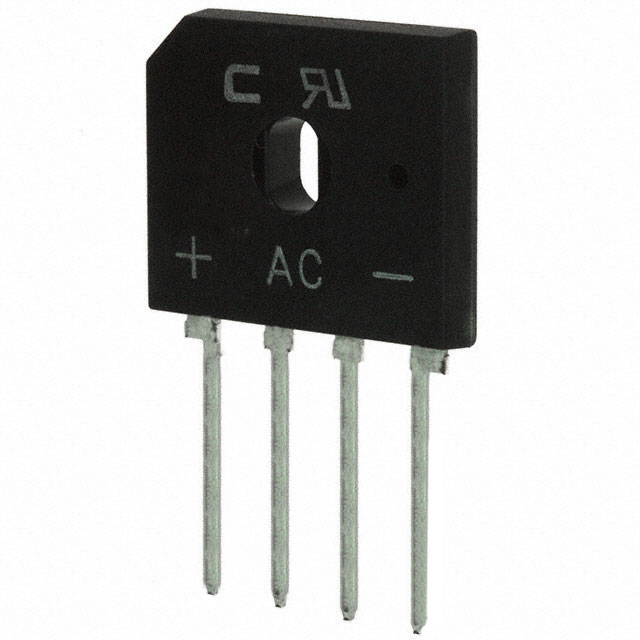
A rectifier is one of the types of diodes that perform the function of converting alternating current to direct current in a circuit. Applications include half-wave and full-wave rectifiers. In addition, rectifier diodes are used in groups to perform AC to DC power conversion. One such application is a bridge rectifier, which uses 4 or 6 diodes to rectify the input signal.
Zener Diodes
A Zener diode is one of the diode types that is similar to a basic PN junction diode, but operates at reverse bias and is used as a voltage regulator, limiter circuit, shift register, etc. At forward bias, Zener diodes behave like ordinary PN junction diode types. When an input voltage is applied at a reverse bias, the narrow depletion layer allows electrons to "tunnel" from the valence band on the P side into the conduction band on the N side.
Light Emitting Diodes (LEDs)
Light-emitting diodes are one of the most common types of diodes that convert electrical energy into radiation. Popular screen displays are made from LEDs that work on the principle of electroluminescence, in which electrical energy produces photons. In semiconductor physics, electron hole recombination usually means moving from a high energy state to a low energy state. A change in energy state releases heat or light.
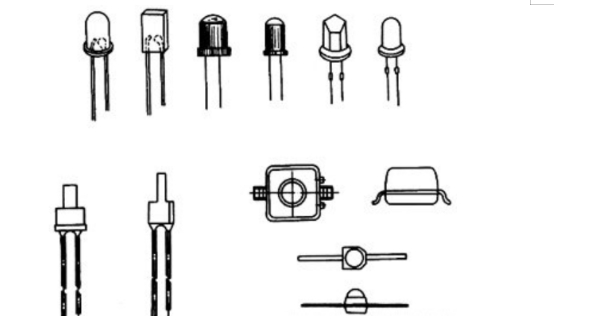
Schottky Diodes
In Schottky diodes, there is no PN junction, but a metal bonded to an N-type or P-type semiconductor. The N-type Schottky diode type consists of N-type materials and metals, and the P-type Schottky diode consists of P-type materials and metals. In a Schottky type diode, the bond between the metal and the N-type semiconductor forms a junction inside the diode.
Power Diodes
Power diodes are part of the high-power electronic diode type. Just like most power semiconductor devices, the power diode has an additional N-layer, also known as a drift region. The heavily doped P+ region and the N-drift region form a junction. The two layers grow epitaxially on the heavily doped N+ layer. This doping concentration and three-layer arrangement increases current and voltage ratings for high power applications.
Photo diodes
In contrast to LED diodes, photodiodes convert light energy into electricity. A photodiode, also known as a photodetector, is a PIN diode that operates in response to incoming light. Applications of photodiodes include light detection, remote control, lenses, optical filters, etc. Photons with an intensity greater than the semiconductor band gap must strike the surface to create electron hole pairs. These diodes generate current when exposed to light and are used in sensors and solar cells.
Varactor Diodes
Varactor or varactor or variable capacitance diode types are devices that provide electrically controllable capacitors. Varactor diode types are used instead of capacitors to store charge in microwave applications. When any type of diode is reverse-biased, the depletion layer thickness increases as the input voltage increases. Junction area, doping concentration, and various other factors determine capacitance. Used in tuning circuits, varactor diodes change capacitance with the applied voltage, making them essential in RF design.
Previous Chapter:What is an interface IC?
Next Chapter:What is BGA